Tuesday, February 22, 2011

ALGUNAS CARNES Y EMILIANO ZAPATA

The meat first.  I still can't tell you how Mexicans pronounce T-bone, like English speakers, or "tay-bonay."  I asked for it both ways at two market meat stands, and they understood me, but they didn't have any.  They didn't repeat what I said, and I didn't want to be too gringo-ish and ask them how they say it.  So instead we got these rib steaks and some chorizo verde:


El sr J fried one of the steaks for dinner and the flavor was good, but it was a little tough (like the steaks in France).  So the next one will have to be marinated.  The chorizo verde, on the other hand, like all the chorizo here, is delicious.  I never was much of a sausage aficionada until now.  What makes it green, you ask?  According to my Larousse de la cocina mexicana, it's parsley, cilantro and chard.  And, of course, there are parts of the pig body in there that I don't want to think about.

About that bag.  Emiliano Zapata was a hero of the Mexican revolution, the centennial (of the beginning) of which was celebrated last year.  We needed another shopping bag, and, being revolutionary sympathizers ourselves, we chose this one.  Little did we know the emotions it would stir up as we strolled around market.  At the place where we buy most of our fruit and vegetables, we put it on the floor, out of the way, while we filled up a carton with our purchases.  When we went to the scales to figure out our bill, we saw Juan had it hanging over a shelf to display it.  At another stand the guy behind the produce produced a long elucubration* on which "heroes" sold out (Carranza se vendió, etc.).  We never thought about such reactions when we bought the bag.  But we wonder how many vendors in US markets could recount the history of their own revolution in such detail.  Or how many Congress-people (like Michelle Bachmann, who thinks the "Founding Fathers" fought hard to defeat slavery and eliminate it from our Constitution!).

*I used to use this word when I was translating from French to English because it is a cognate and I found it--elucubration--in the English dictionary.  Not a word I had ever used before.  El sr J asked me last night why I hadn't used it on the blog.  I said I never would, too pretentious, but it popped into my mind just now, so there it is.

Saturday, February 19, 2011

POLLO ROSTIZADO

We bought this at a roasted chicken stand close to market.  The peppers and tortillas came with it.  Delicious. And inexpensive.  Made us wonder why we buy them raw and cook them at home.  It will provide various meals, especially since el sr J cooked the carcass for stock.  We each tried a pepper, but had to reconsider.  Too hot for us.  We wondered how many chickens it would take to accommodate that amount of peppers.  For us to survive the eating.    


Thursday, February 17, 2011

VENGANZA SEXUAL


Venganza sexual was the title in Spanish for the Australian film, Alexandra's Project, which we saw the other night around the corner at the Centro de Arte.  A very bad title interpretation, if you ask me.  The revenge was much more than sexual; it was total.

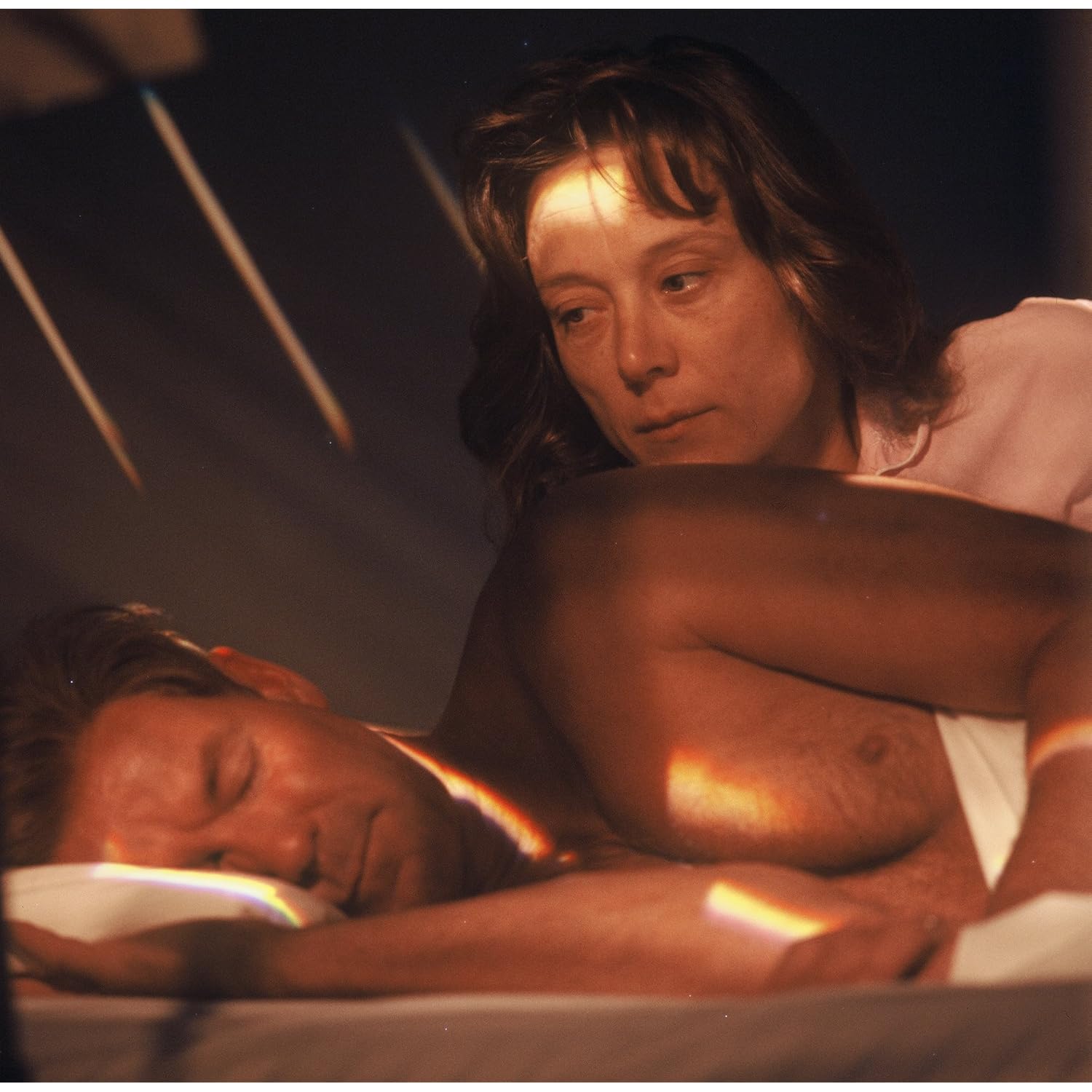
The opening music made clear that this was a stalker movie, a genre I usually avoid.  But this time the tables were turned and the female protagonist was, it seemed, stalking her husband.  I don't know why, but this theme was much more interesting for me.  I wasn't really expecting the woman to jump out from behind a door or closet and attack her husband; I just didn't know what to expect.  At one point she gave their children some colored liquid to drink, and you know what we all were thinking.  Here she is contemplating her project:


This film followed Scenes from a Marriage and The Cook, the Thief, the Woman, Her Lover (Helen Mirren, aka The Queen,  naked!).  Seems like there's a "vengeful woman" theme.  

El sr J thinks they're compensating for Malinche.

Tuesday, February 15, 2011

SINFONIA, PARTE II

Remember the yarn store?  Hilos, estambres?  Well, over the past month I bought a lot of this yarn:

100% cotton

And here is what I made with it:


I just have to put a border on with the leftover yarn and work in all those loose ends.  Then it will be ready to keep Mimi or Alain warmish (but not too) at night.

Monday, February 14, 2011

FLOR DE CALABAZA

Happy Valentine's Day.  No, that is not what this is all about.  I'm holding a nosegay of squash blossoms, hoping el sr J will make something out of them.


And he did!  Sopa de flor de calabaza.  Some chicken stock (casera), some herbs, some vegetable stock (also casera), some white wine, some masa (in the form of old tostadas), y ya está.   


Can corn smut be far behind?

Sunday, February 13, 2011

SINFONIA, PARTE I

We wanted to go to the symphony Friday night, but it was sold out.  A mostly pops concert. So we bought tickets to the same program today, Sunday, at noon.


I brought the camera and was trying to work up the nerve to take a photo while el sr J was looking through the program to find where it said "no photos allowed."  He didn't find it and I worked up my nerve, but very early on.  Some people took photos later, in the middle of a piece.  Hmmm.  In the background are the names of the men in the Constitutional Congress.  Note the name "Venustiano Carranza," our address.  We arrived early, as usual, and had fun pairing names on the wall to suggest to our hijo menor for the impending twins.  It's good they're boys:  there are no female names on the wall.


The conductor talked to us, encouraging us to come to the Friday evening concerts in the future, because the orchestra was not going to continue doing two concerts in one weekend.  Some people yelled out that they liked the Sunday ones better.  Hmmm.  Then the concert started.  There were babies and young children making noise.  The conductor turned around, displeased, twice, and then he stopped in the middle of a piece, turned around and asked the people with the loud children to take them away:  "sáquenlos, por favor." 


The audience applauded and that was that.  Which is probably why the conductor doesn't want to do Sundays.  Let them get babysitters for Friday nights.  It's true that orchestras everywhere are trying to attract a younger audience, which explains today's program, but there are limits to how young.  

Thursday, February 10, 2011

PASTES

When we lived in the US, we used to make pasties (that's with a short "a" to distinguish it from those other things with a long "a."), a meat and onion and potato concoction baked in pie crust.  It's an inexpensive meal and the cooking process tenderizes cheap cuts of meat.  We understood them to have originated with immigrant Scandinavian miners working the iron and copper mines in the Lake Superior neighborhood.  Pasties were compact and nutritious and could be easily carried in a lunch pail and eaten cold, even underground.  The miners in West Virginia, primarily of Italian origin, had their own version
--pepperoni rolls.

This Scandinavian connection was confirmed when our hijo menor lived in the UP (the Upper Peninsula of Michigan, on the shores of Gitchee Gumee) and el Sr J saw shops specializing in this ethnic delicacy in Houghton and Hancock.  The population was predominantly of Finnish ancestry; the principal economic activity had been copper mining.

It turns out that pasties were not unique to the Scandinavians:  Welsh miners had them, too, and carried the recipe wherever they went.  Famous for their mining expertise, Welsh miners were in demand wherever mineral stuff was dug out of the earth.  Including, of course, Mexico.  Pasties were brought here by the Welsh (centered mainly in Hidalgo state, adjacent to us) and pasties, like so many other things of foreign origin, were assimilated into the local culture.  In Mexican cuisine the spelling has been changed to "pastes,"  with a pronunciation that closely approximates "pasties."

Here is the pastes shop nearest us, across from the Mercado La Cruz:


The fillings might not be recognizable to the Finns (green and red mole, chorizo, tuna???), but the pie crust is made by hand daily and they are go-o-o-od.  We don't go down in the mine, but we do dig into the miner's lunch from time to time.